Improving Access to Mental Health and Substance Use Disorder Services
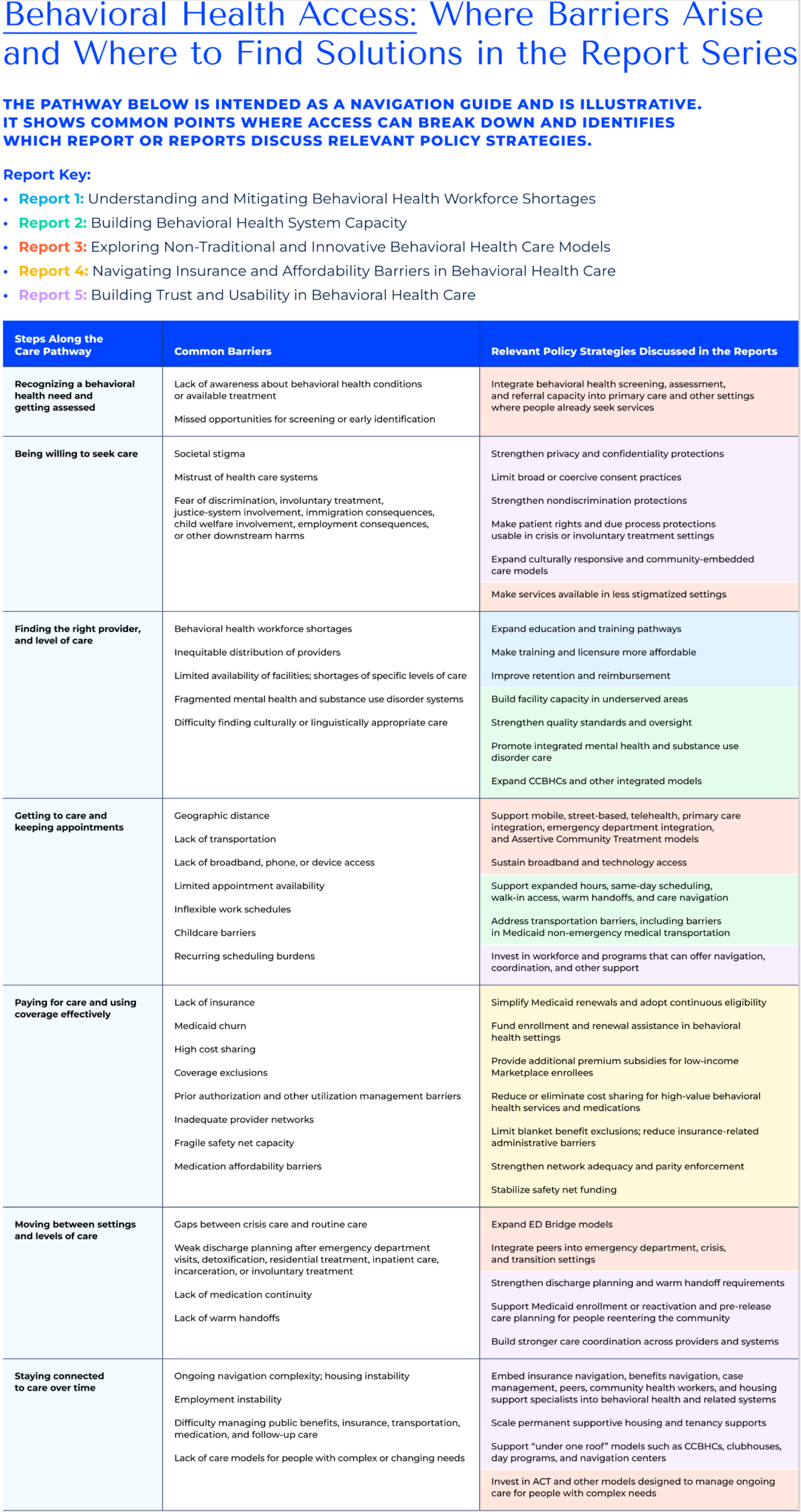
The United States of America is facing an acute mental health and substance use crisis. As the demand for services to treat mental health and substance use disorders (MHSUD) keeps increasing, the health care system in this country has struggled to meet this growing need. Americans seeking treatment for MHSUDs, especially those from underserved communities, face numerous barriers to accessing MHSUD services and multifaceted solutions are necessary to reduce or remove these barriers. The various components of the MHSUD access puzzle include: mitigating behavioral health workforce shortages; assessing system capacity; exploring innovative solutions like telehealth and integration with primary care; removing financial barriers; and reducing stigma, cultural and awareness-related barriers.
With support from the National Institute for Health Care Reform, CHIR researchers have conducted qualitative research to examine the effectiveness of various efforts to improve MHSUD treatment access. This research is published in a series of five reports, each of which focuses on a unique domain of MHSUD access.
As of June 2026, CHIR researchers have published all five reports. The first focuses on mitigating behavioral health workforce shortages, the second explores ways to expand behavioral health system capacity, the third covers innovative solutions to expand access to care, the fourth examines financial barriers to behavioral health services, and the fifth investigates cultural barriers to access.